
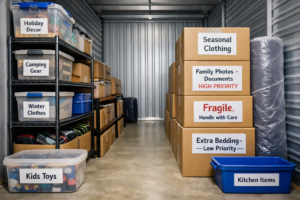
How to Organize a Storage Unit the Right Way (So You Don’t Regret It Later)
Renting a storage unit is easy.
Organizing it the right way is what most people get wrong — especially in the spring.
Every year, as spring arrives in Upstate New York, we see renters rush to move items into storage during cleanouts, renovations, moves, and downsizing projects. The result is often the same: a packed unit with no aisle, unlabeled boxes, and items buried behind furniture that they need again weeks later.
This local guide walks you through exactly how to organize a storage unit the right way, so it stays accessible, protected, and stress-free throughout the spring and beyond.
Why Storage Unit Organization Matters More in Upstate New York
If you live in Upstate New York, how you organize a storage unit matters more than you might think.
In areas like Binghamton, Endwell, Endicott, Conklin, Greene, and Lisle, spring brings fluctuating temperatures, excess moisture, snowmelt, and unpredictable weather. We routinely see renters move items into storage in March or April assuming everything will be fine — only to return weeks later to disorganized units, damp boxes, or items they can’t easily reach.
At Laing Self Storage, we help local renters avoid these issues every spring by planning their storage unit layout correctly from day one.
Why Most People Regret How They Set Up Their Storage Unit
Spring storage often happens fast. People are:
-
Clearing space after winter
-
Preparing homes for sale
-
Renovating
-
Moving between leases
In the rush, organization gets skipped.
The most common regrets we hear from local renters include:
-
“I can’t get to anything without unloading half the unit.”
-
“I didn’t think I’d need this stuff so soon.”
-
“I should have labeled these boxes better.”
-
“I wish I left an aisle.”
All of these problems are preventable with a simple setup plan.
Step-by-Step: How to Organize a Storage Unit the Right Way
1. Start With a Simple Layout Plan
Before loading anything, decide:
-
Which items you’ll need frequent access to
-
Which items are long-term storage
-
Whether you’ll rotate seasonal items in and out
Think of your storage unit like a walk-in closet, not a pile of boxes. A few minutes of planning saves hours of frustration later.
2. Always Leave a Center Aisle
One of the biggest mistakes renters make is packing units wall-to-wall.
Even in smaller units, you should leave a 2–3 foot aisle down the center or along one side.
Leaving an aisle allows you to:
-
Access boxes without unloading everything
-
Inspect items during the spring and summer
-
Add or remove items easily
This is especially important during spring in the Southern Tier, when renters often return to storage multiple times.
3. Back of the Unit = Long-Term Storage
Place long-term items toward the back of the unit, including:
-
Holiday decorations
-
Archived paperwork
-
Extra furniture
-
Items you won’t need until fall or winter
Stack heavier items on the bottom and lighter items on top. Use vertical space safely, and avoid leaning items against walls without protection.
4. Front of the Unit = Grab-and-Go Items
The front of your unit should be reserved for items you may need again soon, such as:
-
Seasonal clothing
-
Sports equipment
-
Tools
-
Boxes marked “HIGH PRIORITY”
This setup prevents the common spring mistake of burying items you need again within weeks.
The Labeling System That Actually Works
Labeling one side of a box with a Sharpie isn’t enough.
For effective storage organization:
-
Label two sides and the top of every box
-
Include:
-
Room or category
-
General contents
-
Priority level (High / Medium / Low)
-
Example:
Bedroom – Winter Coats – High Priority
Many local renters also keep a simple list on their phone noting what’s inside each box.
Climate-Controlled vs Non-Climate Storage: Organization Differences
Climate-Controlled Storage Units
Best for:
-
Furniture
-
Clothing
-
Electronics
-
Photos and documents
Organization tips:
-
Leave small airflow gaps around furniture
-
Use shelving to maximize vertical space
-
Avoid sealing items tightly against walls
Non-Climate Storage Units
Best for:
-
Tools
-
Outdoor equipment
-
Durable household items
Organization tips:
-
Elevate items slightly off the floor
-
Use plastic bins instead of cardboard when possible
-
Keep moisture-sensitive items toward the center of the unit
Common Spring Storage Mistakes We See in Broome & Chenango County
Every spring, renters across Broome and Chenango County make the same avoidable mistakes.
At our storage facilities, the most common issues we see include:
-
No aisle left for access
-
Boxes stored directly on concrete floors during wet spring months
-
Poor labeling during rushed spring moves
-
Mattresses and furniture stored without protection
These are not theoretical mistakes — they’re issues we see regularly during the spring storage season.
Local Storage Tip for Spring in the Southern Tier
Spring in the Southern Tier often means lingering snowmelt, rain, and fluctuating humidity.
When organizing a storage unit locally, we recommend:
-
Using moisture absorbers
-
Leaving airflow gaps around furniture
-
Elevating boxes slightly
-
Choosing climate-controlled storage for sensitive belongings
These steps help protect items stored through spring and early summer in Upstate New York.
Frequently Asked Questions About Organizing a Storage Unit
How do I organize a storage unit for easy access?
Leave a center aisle, store frequently used items near the front, place long-term items in the back, and clearly label all boxes on multiple sides.
Should I leave space between items in a storage unit?
Yes. Small air gaps improve airflow, reduce moisture risk, and make items easier to access.
What should go in the back of a storage unit?
Items you won’t need often, such as seasonal decorations, extra furniture, and archived belongings.
How should I label boxes for storage?
Label the top and at least two sides with contents, category, and priority level.
Does climate control change how I organize my unit?
Yes. Climate-controlled units allow tighter stacking for sensitive items, while non-climate units benefit from elevation and airflow.
Final Thought: Storage Should Make Life Easier
A properly organized storage unit saves time, protects belongings, and reduces stress.
If you’re organizing a storage unit this spring and aren’t sure what size or setup works best, our local team is always happy to help.
Laing Self Storage proudly serves Binghamton, Endwell, Endicott, Conklin, Greene, and Lisle with clean, secure storage designed for Upstate New York conditions.