
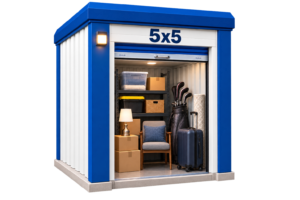
 How to Pack a 5×5 Storage Unit Efficiently
A 5×5 storage unit gives you 25 square feet of floor space and is comparable to a small walk-in closet. Although it is one of the smallest standard storage options, careful planning can turn it into a surprisingly useful extension of your home, apartment, dorm room, or business.
The most comfortable way to pack a 5×5 storage unit is to use sturdy boxes in matching sizes, place heavy and rarely needed items along the back and bottom, use the unit’s vertical space, and leave a narrow path to anything you may need during the rental. The goal is not simply to make everything fit. The goal is to keep your belongings protected, stable, visible, and reasonably accessible.
This guide explains exactly how to do that.
Quick Answer: How Do You Pack a 5×5 Storage Unit?
To pack a 5×5 storage unit efficiently:
- Make a list of everything you plan to store.
- Use uniform, stackable boxes whenever possible.
- Label every box on at least two visible sides.
- Place heavy boxes and sturdy furniture at the bottom.
- Put rarely used belongings in the back.
- Store frequently needed items near the entrance.
- Use shelves and vertical space instead of filling only the floor.
- Leave a small access path rather than packing the unit wall to wall.
- Avoid overfilled boxes, unstable stacks, and prohibited items.
- Photograph the finished unit and keep a simple inventory.
How Big Is a 5×5 Storage Unit?
A standard 5×5 storage unit measures approximately 5 feet wide by 5 feet deep, providing about 25 square feet of floor space. If the unit has an 8-foot ceiling, it may provide approximately 200 cubic feet of total storage volume.
That vertical volume is what makes good packing so important. If you only place boxes and belongings across the floor, you waste much of the available space. Stacking safely and using freestanding shelving can substantially improve organization.
Unit dimensions are approximate, and door openings, ceiling height, building features, unit type, and availability can vary by location. Always confirm the actual unit details before moving in.
What Can Comfortably Fit in a 5×5 Storage Unit?
A well-packed 5×5 unit is generally suitable for a modest collection of smaller household, seasonal, personal, or business belongings. Depending on the size and shape of each item, it may hold:
- Approximately 20–30 small or medium moving boxes
- Holiday decorations and seasonal décor
- Several plastic storage totes
- A small bookcase or narrow shelving unit
- A nightstand, end table, or small chair
- Lamps with shades removed and protected
- Suitcases, duffel bags, and travel equipment
- Golf clubs, skis, fishing gear, or other sporting equipment
- Camping supplies
- Small kitchen appliances
- Clothing stored in sealed totes or wardrobe boxes
- Books, documents, and office supplies
- Dorm-room belongings between semesters
- Small-business records, samples, or light inventory
- Children’s toys, baby equipment, or outgrown clothing
A 5×5 unit is best for small-scale decluttering and organized overflow storage. It is usually not the right choice for the complete contents of a multi-room apartment or home.
Before You Pack: Decide What Actually Belongs in Storage
Do not begin by carrying random items into the unit. First, sort everything into four categories:
- Store: Items you want to keep but do not currently need at home
- Keep accessible: Items you expect to retrieve during the rental
- Donate or sell: Useful belongings you no longer need
- Discard: Broken, expired, unsafe, or prohibited items
This simple step prevents you from paying to store belongings that no longer serve a purpose. It also gives you a more accurate picture of whether a 5×5 unit will be comfortable or whether you should consider a larger size.
Step-by-Step: How to Pack a 5×5 Storage Unit Comfortably
1. Create a Simple Inventory
Write down the larger items and estimate how many boxes or totes you will have. Group similar belongings together, such as holiday decorations, winter clothing, books, office supplies, or sports equipment.
An inventory helps you plan the unit before move-in and makes it easier to find an item later. You do not need a complicated spreadsheet—a numbered list on your phone can work well.
2. Choose Strong, Uniform Boxes
Boxes of similar dimensions create straighter, safer stacks and waste less space than a collection of mismatched cartons. Use small boxes for books, tools, dishes, and other dense belongings. Use medium boxes for lighter household items.
Avoid making large boxes excessively heavy. A box that is difficult to lift is also more likely to fail at the bottom or cause an unstable stack.
Clear plastic totes can be useful for moisture-resistant organization and quick identification, but they should still be labeled. Do not assume you will remember what is inside every container months later.
3. Label at Least Two Sides of Every Container
Label the top and at least one side—or preferably two sides—of every box or tote. If a box is placed in a stack, the top label may no longer be visible.
Use specific labels such as “Christmas Tree Ornaments—Fragile” or “Office Tax Records—2025” instead of vague labels such as “Miscellaneous.” Numbering the containers and matching them to your inventory makes retrieval even easier.
4. Plan the Unit in Zones
Mentally divide the unit into three zones:
- Back zone: Rarely used belongings
- Middle zone: Occasional-use items
- Front zone: Items you may need soon or regularly
For example, archived documents and sentimental keepsakes may go in the back, while seasonal sports equipment or holiday decorations should remain closer to the door when their season approaches.
5. Place Heavy and Sturdy Items First
Start with stable furniture, sturdy totes, and properly packed heavy boxes. Place the heaviest containers at the bottom and lighter or fragile belongings above them.
Never place a heavy box on top of a lampshade, upholstered chair, fragile tote, or partially filled carton. A stack is only as strong as its weakest container.
6. Use the Full Height Safely
Vertical space is valuable in a 5×5 unit. Use sturdy freestanding shelves when appropriate, or create stable box stacks with the heaviest containers at the bottom.
Keep each stack straight and avoid leaning belongings against the door. Do not build a tower that could shift or fall when you remove one container. Leave enough room below fire sprinklers and around building equipment as required by the facility.
7. Disassemble Small Furniture When Practical
Remove legs from small tables, collapse folding furniture, and take apart shelving when it will save meaningful space. Place screws, bolts, and small hardware in a labeled resealable bag, then secure the bag to the corresponding furniture.
Protect finished surfaces with moving blankets, furniture pads, or clean breathable covers. Avoid sealing wood or upholstered furniture in non-breathable plastic for extended periods because trapped condensation can contribute to odors or moisture problems.
8. Fill Safe, Usable Empty Spaces
Use the inside of suitcases, empty drawers, baskets, and sturdy furniture to hold lightweight belongings. This reduces wasted space without creating unsafe pressure on the item.
Good items for these spaces include linens, soft decorations, pillows, or clothing in sealed bags. Do not place loose liquids, food, or sharp tools inside furniture.
9. Leave a Narrow Access Path
If you expect to visit the unit, leave a narrow path from the entrance toward the middle or back. In a 5×5 unit, this may only be a small central opening, but even limited access can prevent you from unloading half the unit to retrieve one box.
If you will not need anything until the final move-out, a tighter arrangement may be acceptable. Even then, keep labels facing the opening and avoid placing belongings directly against the door.
10. Make a Final Map and Take Photos
Before closing the unit, take several photos showing the location of each stack. Make a simple note such as:
- Holiday décor: back left
- Business files: back right
- Winter clothing: center shelf
- Sports equipment: front left
This takes less than five minutes and can save considerable time later.
A Comfortable 5×5 Storage Unit Layout
One practical arrangement is:
- Back wall: Tall, stable stacks of rarely used boxes
- Left wall: Narrow shelving or labeled totes
- Right wall: Small furniture, suitcases, or sports equipment
- Center: A narrow access space
- Near the door: Frequently used seasonal belongings and your inventory list
Avoid placing an important item in the rear corner unless you are confident you will not need it until move-out.
What Packing Supplies Should You Use?
The right supplies help protect your belongings and make the limited space easier to manage. Consider using:
- Small and medium moving boxes
- Clear plastic totes with secure lids
- Heavy-duty packing tape
- Permanent markers or printed labels
- Moving blankets and furniture pads
- Bubble wrap or packing paper for fragile items
- Resealable bags for furniture hardware
- Freestanding shelves, if permitted and appropriately sized
- Mattress or fabric covers when applicable
- A simple inventory sheet
Avoid relying on thin grocery boxes, damaged cartons, trash bags, or containers with weak lids. Trash bags are difficult to stack, easy to tear, and often make a small unit feel disorganized.
How to Protect Furniture, Electronics, Clothing, and Documents
Furniture
Clean and completely dry furniture before storage. Remove detachable parts when useful, protect corners, and use breathable covers. Never place heavy boxes on upholstered surfaces.
Electronics
Back up important data, remove batteries when appropriate, and use original packaging if available. Keep electronics off the floor and avoid stacking heavy items on top of them. Belongings sensitive to temperature changes may benefit from a temperature-controlled unit.
Clothing and Linens
Wash and thoroughly dry clothing and linens before packing them. Store them in clean, labeled containers. Avoid storing damp fabric, which can develop odors or mildew.
Books and Documents
Place books flat in small boxes so the containers remain manageable. Store documents in sealed, labeled file boxes or totes and keep them off the floor. Consider temperature-controlled storage for important records, photographs, and sensitive paper items.
Common 5×5 Storage-Unit Packing Mistakes
Packing Without a Plan
Loading items in the order they come out of your vehicle often leaves empty gaps and blocks belongings you will need later.
Using Too Many Different Box Sizes
Mismatched boxes create unstable stacks and waste space. Uniform containers are easier to arrange.
Putting Heavy Items on Top
Heavy containers belong on the floor or at the bottom of a strong stack. Placing them above lighter boxes can crush belongings and create a safety hazard.
Leaving Boxes Unlabeled
An unlabeled wall of boxes forces you to open and move multiple containers to find one item.
Ignoring Vertical Space
A 5×5 unit becomes much more useful when you safely use its height.
Packing Damp or Dirty Belongings
Moisture, dirt, food residue, and odors can create avoidable problems during storage. Clean and dry everything first.
Blocking the Door
Leave clearance around the entrance so items cannot shift against the door and prevent it from opening properly.
What Should Not Go in a Storage Unit?
Storage facilities generally prohibit or restrict certain belongings. Do not store:
- Perishable food
- Explosives, fireworks, or ammunition where prohibited
- Gasoline, propane, or flammable chemicals
- Hazardous or toxic materials
- Illegal items
- Live plants or animals
- Wet or moldy belongings
- Unregistered or improperly prepared vehicles where prohibited
- Anything restricted by your rental agreement
Always review the facility’s rules and your rental agreement before move-in. If you are unsure about a specific item, ask the storage team before bringing it to the property.
Do You Need Temperature-Controlled Storage for a 5×5 Unit?
Temperature-controlled storage may be the better option when storing items that can be affected by prolonged heat, cold, humidity, or temperature swings, including:
- Electronics
- Wood furniture
- Photographs
- Important documents
- Musical instruments
- Artwork
- Collectibles
- Certain fabrics and sentimental belongings
A standard unit may be appropriate for durable belongings such as outdoor equipment, many tools, and properly packed household items. The best choice depends on what you are storing, how long it will remain in storage, and the features offered at your selected location.
Use the Laing Self Storage Unit Size Guide Before You Rent
Not sure whether a 5×5 provides enough room? Visit the Laing Self Storage Unit Size Guide to compare common storage-unit dimensions and see examples of what may fit in each size. The guide can help you determine whether a compact unit will work or whether moving up to a 5×10, 10×10, or larger option would give you more comfortable access. You can also use the Storage Size Calculator to estimate a recommended size based on the belongings you plan to store. Unit sizes, features, prices, and availability vary by facility, so confirm current options at the location nearest you.
Find a Laing Self Storage Location Near You
Laing Self Storage is a locally owned storage company serving customers throughout Broome County, Chenango County, the Greater Binghamton area, and surrounding Southern Tier communities. Explore all six locations:
- Laing Self Storage of Binghamton — 155 West Service Road, Binghamton, NY
- Laing Self Storage of Conklin — 430 Broome Corporate Parkway, Conklin, NY
- Laing Self Storage of Endwell — 105 Brink Street, Endwell, NY
- Laing Self Storage of Endicott — 709 North Street, Endicott, NY
- Laing Self Storage of Greene — 151 South Chenango Street, Greene, NY
- Laing Self Storage of Lisle — 19 Owen Hill Road, Lisle, NY
Storage-unit sizes and features vary by property. Check the live availability at your nearest location before choosing a unit.
Local Self Storage Across Broome County and Chenango County
Laing Self Storage serves homeowners, renters, students, contractors, and businesses throughout Broome County, Chenango County, and the Southern Tier of New York. Our facilities in Binghamton, Conklin, Endwell, Endicott, Greene, and Lisle serve customers from nearby communities including Johnson City, Vestal, Kirkwood, Windsor, Whitney Point, Marathon, Norwich, Oxford, Owego, Apalachin, and surrounding areas. Storage-unit sizes, features, and availability vary by facility, so check current options at the location nearest you.
Frequently Asked Questions About Packing a 5×5 Storage Unit
Is a 5×5 storage unit the same size as a closet?
A 5×5 unit provides approximately 25 square feet of floor space and is commonly compared to a small walk-in closet. Actual dimensions and ceiling heights can vary.
How many boxes fit in a 5×5 storage unit?
A carefully packed 5×5 unit may hold roughly 20–30 small or medium boxes, but the actual number depends on box dimensions, the presence of furniture or shelving, ceiling height, and how much access space you leave.
Can a queen mattress fit in a 5×5 storage unit?
A standard queen mattress is approximately 60 inches wide, which is the same nominal width as a 5-foot unit. Door clearance and actual interior dimensions may make the fit difficult or impossible. Do not assume it will fit without confirming the unit and doorway measurements. A larger unit is often more practical for mattresses and bedroom furniture.
Can a bicycle fit in a 5×5 storage unit?
Many bicycles can fit when positioned carefully, partially disassembled, or stored with an appropriate freestanding rack. The available room depends on the bicycle and everything else being stored.
Can the contents of a one-bedroom apartment fit in a 5×5 unit?
Generally, no. A 5×5 is better for boxes, seasonal belongings, dorm-room items, and a few small pieces of furniture. The complete contents of a one-bedroom apartment usually require a larger unit.
Should I put shelving in a 5×5 storage unit?
Freestanding shelving can make a small unit easier to organize by using vertical space and keeping boxes accessible. Confirm that the shelving fits, is stable, and complies with facility rules. Do not permanently attach anything to the unit.
Should I leave space between my belongings and the walls?
When possible, leave a small amount of space for airflow and avoid pressing belongings tightly against walls, doors, vents, sprinklers, or building equipment. Follow all facility-specific instructions.
How do I keep a 5×5 storage unit organized?
Use matching containers, label multiple sides, keep heavy boxes low, group similar belongings together, leave frequently used items near the entrance, and maintain a photo inventory or simple map.
What if everything does not fit comfortably?
Do not force the door shut or create unsafe stacks. Review the Unit Size Guide and compare a 5×10 or larger unit. A slightly larger space may be worth it if you need regular access or are storing furniture.
Make Every Square Foot Count
A 5×5 storage unit can hold more than many people expect, but comfort comes from organization—not from forcing in as many belongings as possible. Start with a realistic inventory, use strong matching containers, build stable stacks, take advantage of vertical space, and preserve access to the items you may need.
Ready to find storage near you? Explore Laing Self Storage locations and current availability or compare your options with the Unit Size Guide.